Goal setting in addiction recovery is one of the most powerful tools you can use to build a fulfilling life after substance use. Without direction, even the strongest recovery journey can lose momentum. By learning how to create attainable goals, you unlock motivation, purpose, and structure in your daily life. Whether you’re just beginning or working toward long term recovery, setting goals that inspire and ground you is essential to staying on track and stepping into the life you were meant to live.
Why Goal Setting in Addiction Recovery Matters
Goal setting in addiction recovery gives your life structure and purpose beyond just staying sober. Once the chaos settles, you need direction to avoid drifting. By setting realistic goals that align with your values, you can unlock a path of personal growth, build a healthier future, and stay motivated in your recovery journey.
From Survival to a Fulfilling Life
Recovery isn’t the finish line—it’s the foundation. Without clear direction, even the most stable sobriety can lose meaning. That’s where recovery goals come in. They keep you grounded, help you stay focused, and remind you why you started.
Setting realistic goals gives you something to work toward, especially when the excitement of early recovery fades. These goals don’t have to be massive. They just need to be attainable goals that align with your values and move you forward. Whether it’s reconnecting with family members, improving your physical health, or learning new skills, every milestone becomes a win.
Goals serve a higher purpose—they create vision, momentum, and direction. With each small step, you’ll not only achieve more—you’ll become more. That’s the power of turning survival into purpose.
Set Goals In Our FREE Relapse Prevention Worksheet
Goals in Recovery: How Direction Fuels Progress
Setting goals in recovery isn’t just about ambition—it’s about direction. When you’re rebuilding your life after addiction, the days can feel long and uncertain. Without clear goals, it’s easy to drift—physically sober, but emotionally stalled. That’s where direction becomes critical. By focusing on realistic goals and actionable steps, you gain the structure needed to move through the recovery process with purpose. Goals help you connect your daily effort to the big picture, giving each step a greater sense of meaning.
The Danger of Drifting Without Purpose
Drifting in recovery is dangerous. Without direction, motivation fades, and emotional numbness or burnout creeps in. You might even question if this life is worth the fight. But meaningful goals provide a compass—they give clarity when things get foggy and help you stay on the right path.
Setting realistic goals and working toward small wins can significantly reduce stress and prevent relapse. When your goals are tied to your values and your vision for a brighter future, they give you a reason to keep showing up. With each milestone, you gain confidence, resilience, and momentum. Combined with strong coping strategies, goals turn survival into progress and progress into purpose.
The Big Three Method: A Recovery-Friendly Goal System
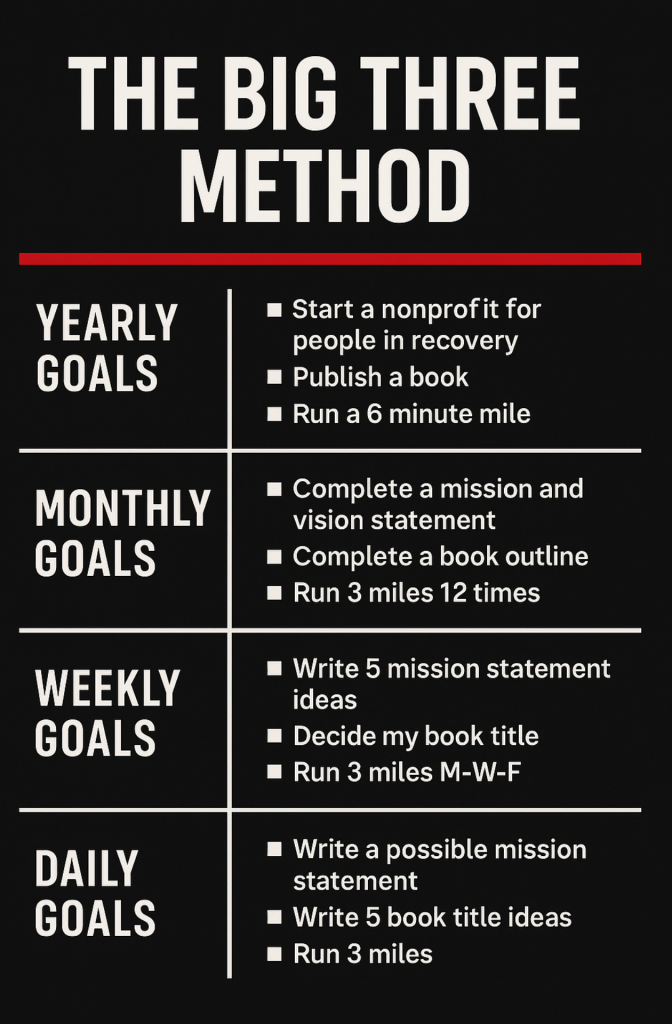
In recovery, it’s easy to feel pulled between broad goals and daily demands. The Big Three Method bridges that gap. It’s a simple, repeatable structure that turns ambitious goals into achievable milestones—helping you build meaningful change without getting lost in the pressure of perfection.
Here’s how it works: choose three long term goals for the year that light you up. Then break each into measurable, monthly targets. From there, set clear weekly goals and define three daily actionable steps to move forward. This keeps your focus sharp, your self esteem growing, and your momentum building.
Writing makes this even more powerful—put your goals on paper to give them life and track your progress. Over time, this structure reinforces commitment and increases your chances of success, while supporting the habits that sustain lasting sobriety.
From Big Vision to Daily Wins: Examples of Goals for Addiction Recovery
| Timeframe | Goal Area | Example |
|---|---|---|
| Yearly | Long Term Goals | Start a nonprofit for people in recovery Publish a book Run a 6-minute mile |
| Monthly | Measurable Targets | Complete a mission and vision statement Complete a book outline Run 3 miles 12 times |
| Weekly | Achievable Milestones | Write 5 mission statement ideas Decide my book title Run 3 miles M-W-F |
| Daily | Actionable Steps | Write a possible mission statement Write 5 book title ideas Run 3 miles |
With this method, you don’t need to conquer everything at once. You just need to stay committed to today’s three. That’s how big dreams become real—one win at a time.
Examples of Recovery Goals for Different Life Areas
Effective goal setting in addiction recovery means looking beyond sobriety and addressing the full spectrum of life. By creating recovery goals across multiple areas—health, relationships, career, and spirituality—you develop balance, purpose, and resilience.
When you set meaningful goals in each of these categories, you’re not just staying sober—you’re building a new life from the ground up. These aren’t just ideals—they’re part of a repeatable process for growth and progress.

Health, Relationships, Career & Spirituality
Let’s break it down with real-life examples of achievable goals:
- Health: Commit to a healthy diet, attend weekly therapy sessions, or begin a walking routine. Each is achievable, time bound, and supports your ability to stay sober.
- Relationships: Schedule weekly calls with family members, express appreciation to a friend, or rebuild trust through consistent actions. These goals build connection and a sense of belonging.
- Career: Take an online course, polish your resume, or set a 30-day goal to apply to five jobs—realistic goals that align with larger goals for stability.
- Spirituality: Attend a weekly support group, journal daily, or explore a meditation routine—goals that increase peace and focus.
Set effective goals across your life, and you’ll see not only success—you’ll feel it.
SMART Goals in Addiction Recovery
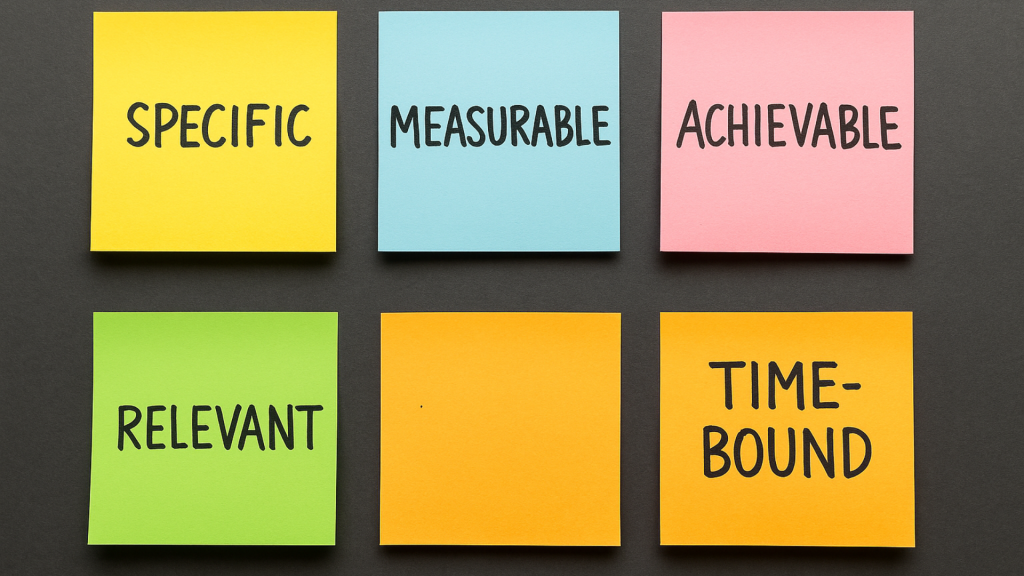
Creating a better life in recovery means moving from vague intentions to clear outcomes—and the SMART framework makes that possible. SMART stands for Specific, Measurable, Achievable, Relevant, and Time Bound. It’s a proven system for setting goals that create momentum, not burnout. When applied to your treatment program or daily life, SMART goals offer clarity, direction, and motivation—especially when the journey feels uncertain.
This method works because it simplifies the process. Instead of saying, “I want to get better,” you define exactly what “better” looks like and how you’ll achieve it. Working with a trusted person, supportive friend, or part of your support network can also help you stay accountable and consistent.
By breaking your vision into SMART goals, you reduce the risk of feeling overwhelmed and increase your chances of building meaningful long term goals that stick.
Make It Specific, Measurable, and Time-Bound
| SMART Element | Definition | Example in Recovery |
|---|---|---|
| Specific | Clear and detailed | Attend 2 therapy sessions per week |
| Measurable | Trackable progress | Journal 5 days this week |
| Achievable | Realistic based on your current stage | Join one new support group this month |
| Relevant | Aligned with your recovery goals | Focus on rebuilding trust with family |
| Time Bound | Has a deadline or schedule | Apply to 3 jobs by the end of the month |
SMART goals help you stay accountable, focused, and empowered—one step at a time.
How to Stay Grounded While Dreaming Big
Pursuing ambitious goals in recovery is exciting—but without grounding practices, that same drive can lead to burnout or distraction. The key is to balance vision with stability. Staying grounded means having routines and tools that keep you focused on the present while still moving toward your future. This balance is what allows you to achieve lasting change without losing touch with what truly matters.
Tools That Keep You Rooted
Three tools can keep you steady as you reach higher: journaling, accountability, and your recovery community.
Journaling helps you process thoughts, track progress, and refocus your energy. It’s more than writing feelings—it’s a space to clarify goals, evaluate next steps, and stay mindful of your growth.
Accountability adds structure. When you share your goals with someone in your support system, like a mentor or supportive friend, you’re more likely to follow through. Being held to your word fuels action.
Lastly, connection to your recovery community is irreplaceable. Whether it’s a weekly support group meeting or one-on-one check-ins, these relationships remind you where you’ve come from—and why you keep going.
Staying rooted doesn’t slow you down. It strengthens your ability to rise.
FAQs About Goal Setting in Addiction Recovery
How do you set goals while in recovery?
Start by identifying what truly matters to you—then break those ideas into realistic, time-bound goals. Use the SMART framework and tools like the Big Three Method to stay focused. Always involve a support system or support group for accountability and align each goal with your stage in the recovery process.
What are the 5 F’s of goal setting?
The 5 F’s—Faith, Family, Fitness, Finances, and Fun—are core life areas to consider when setting recovery goals. They help ensure a well-rounded approach that promotes balance, purpose, and joy in life after addiction, supporting both your personal growth and long term recovery.
What are the 5 C’s of goal setting?
The 5 C’s stand for Clarity, Commitment, Consistency, Confidence, and Celebration. These principles help you define clear objectives, stick with them, and build momentum. Celebrating even small wins strengthens your self esteem and reinforces progress, making each step toward your goal more powerful and sustainable.
What is the overall goal of addiction recovery?
The ultimate goal is to achieve lasting sobriety while building a fulfilling life rooted in purpose, connection, and growth. It’s not just about abstaining from substances—it’s about transforming your mindset, healing relationships, and becoming the person you were meant to be.
Final Thoughts About Recovery Goals From Recovered On Purpose
Recovery goals aren’t just checkboxes—they’re commitments to the life you’re creating. By setting realistic, measurable, and meaningful goals, you build more than momentum—you build purpose. Whether you’re dreaming big or taking your next small step, remember: your progress matters.
Stay grounded, stay focused, and keep showing up. From all of us at Recovered On Purpose, we believe in your future. Set your goals, live them out daily, and never forget—you were made for more.

Adam Vibe Gunton is an American author, speaker and thought leader in addiction treatment and recovery. After overcoming homelessness and drug addiction, Adam found his life’s purpose in helping addicts find the same freedom he found. As Founder and Executive Director of the 501(c)3 nonprofit, Recovered On Purpose, and Managing Partner of Behavioral Health Partners, Adam has helped thousands find freedom from addiction all over the world.