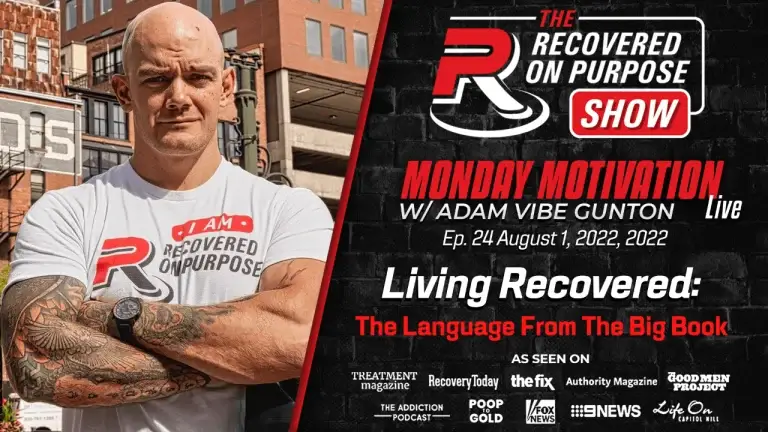
Understanding the Big Book’s Original Message
What the Big Book Actually Says About Recovery
The Big Book of Alcoholics Anonymous is often quoted in recovery spaces, but many of its original teachings and promises have been lost or misinterpreted over time. When we go back to its roots, we find a powerful message of complete freedom from alcoholism, not just lifelong management of a condition.The Big Book describes the ultimate goal of working the 12 Steps as a spiritual awakening that results in being “recovered”. In Alcoholics Anonymous, it states:“We, of Alcoholics Anonymous, are more than one hundred men and women who have recovered from a seemingly hopeless state of mind and body.”This passage shows that the authors did not see alcoholism as an endless struggle, but rather as a condition that could be overcome through spiritual principles. It teaches that true recovery is about transformation and freedom, not just abstinence.Misinterpretations That Have Shaped Modern Recovery
Despite the clear message in the Big Book, modern recovery language often shifts toward lifelong struggle rather than lasting transformation. Phrases like:- “Once an addict, always an addict.”
- “You will always be recovering, never recovered.”
- “We are powerless forever.”
The Difference Between “Recovered” and “Recovering”
One of the most debated words in recovery spaces is whether someone is “recovered” or “recovering.” The Big Book consistently refers to people who have worked the steps as recovered, meaning they have been freed from the obsession to drink.- Recovered means you have completed the necessary spiritual and personal work to no longer be enslaved by addiction. The desire to drink has been removed, and you are living in a new way.
- Recovering implies that you are still in the process, still struggling, and not yet free from the obsession of addiction.
The Power of the Big Book’s Language in Overcoming Addiction
Why Words Matter in Recovery Identity
The words we use to describe ourselves shape our reality. If someone constantly calls themselves a struggling alcoholic or addict, they reinforce a limiting belief that they are bound to their past behaviors.The Big Book encourages a different approach:- Instead of saying “I am powerless” forever, it teaches us to tap into a Higher Power for strength (Step 3).
- Instead of seeing addiction as an endless battle, it presents a clear path to healing.
- Instead of promoting shame-based recovery, it focuses on spiritual awakening and freedom.
How the Big Book Offers Hope and Empowerment
One of the most beautiful aspects of the Big Book is that it was written by people who had found true freedom from addiction. It is not a book of theories—it is a collection of real-life experiences of people who had been hopeless but were now fully restored.Some of the most empowering messages in the Big Book include:- “We are not a glum lot.” – Sobriety is meant to be filled with joy and fulfillment.
- “God could and would if He were sought.” – A reminder that spiritual growth brings power.
- “We have ceased fighting anything or anyone—even alcohol.” – A declaration of victory, not endless struggle.
Moving Beyond Labels: Embracing a Recovered Life
Recovery is about building a new identity, not clinging to the labels of addiction forever. The Big Book shows that while addiction may have been a part of your past, it does not have to define your future.Ways to embrace a recovered life include:- Focusing on spiritual growth rather than just avoiding relapse (Step 11).
- Helping others find the same freedom, which reinforces your own strength (Step 12).
- Recognizing that you are more than your addiction—you are a person of value, purpose, and impact.
Applying the Big Book’s Teachings to the 12 Steps
Step 1: Admitting Powerlessness but Not Hopelessness (Step 1)
One of the most misunderstood concepts in recovery is powerlessness. The Big Book teaches in Step 1 that we must admit that we are powerless over alcohol, but that does not mean we are without hope or a solution.Powerlessness means:- We cannot control our drinking on our own.
- Our willpower is not enough to overcome addiction.
- We need a new source of strength—one greater than ourselves.
Step 3: Making a Decision to Turn Our Will Over (Step 3)
In Step 3, we are asked to turn our will and our lives over to the care of God as we understand Him. Many people struggle with this because they feel afraid of surrendering control. However, the Big Book presents Step 3 not as giving up, but as finally stepping into real strength.The Big Book describes self-will as a major obstacle in recovery:- We try to run life on our terms, leading to chaos.
- We make decisions based on fear, resentment, and selfishness.
- We fight against everything, rather than surrendering to a better way.
Step 9: Making Amends and Experiencing Freedom (Step 9)
Many people fear Step 9 because it requires making direct amends to those we have harmed. However, the Big Book teaches that this step is one of the most liberating experiences in recovery.Step 9 is about:- Restoring broken relationships where possible.
- Taking responsibility for past actions without excuses.
- Clearing away guilt and shame to experience true emotional freedom.
- We will know peace.
- We will not regret the past, nor wish to shut the door on it.
- We will feel the presence of a Higher Power working in our lives.
The Big Book and the 12 Traditions: Staying True to Its Purpose
Tradition One: Unity Over Personal Agendas (The 12 Traditions)
Tradition One states:“Our common welfare should come first; personal recovery depends upon A.A. unity.”The Big Book was not created for individual interpretations or personal philosophies—it was written as a structured guide to help alcoholics find freedom through spiritual principles. When people try to alter its teachings or insert personal beliefs that contradict its core message, unity is lost.In modern recovery spaces, we sometimes see:
- Dilution of the original message, making recovery seem like an indefinite struggle.
- Divisions between those who embrace “recovered” vs. “recovering” language.
- People pushing personal agendas rather than following the proven steps.
Tradition Five: Carrying the Message as It Was Originally Written
Tradition Five states:“Each group has but one primary purpose—to carry its message to the alcoholic who still suffers.”The Big Book was written to provide hope and a solution to those suffering from alcoholism. Over time, however, interpretations of the message have drifted, sometimes replacing hope with fear and transformation with indefinite struggle.Staying true to the Big Book means carrying the message exactly as it was intended:
- That recovery is possible for anyone willing to work the steps.
- That we are not meant to stay in perpetual struggle, but to experience freedom.
- That the primary purpose of recovery programs is to help others, not to create personal followings or businesses.
How Tradition Twelve Reinforces the Power of Anonymity
Tradition Twelve states:“Anonymity is the spiritual foundation of all our traditions, ever reminding us to place principles before personalities.”The Big Book emphasizes humility, service, and spiritual growth. Anonymity ensures that:
- Ego does not take over recovery spaces.
- People in early recovery do not feel intimidated by “celebrity sobriety.”
- The message remains more important than the messenger.
Living Recovered: What the Big Book Teaches About Life Beyond Addiction
The Role of Spiritual Awakening in Lasting Sobriety
The Big Book makes it clear that the ultimate goal of recovery is not just stopping drinking, but achieving a spiritual awakening that transforms the way we live. This is what separates temporary sobriety from lifelong recovery.A spiritual awakening is described in the Big Book as:- A shift in perception—seeing life through a new lens, free from addiction.
- A connection to a Higher Power, providing strength and guidance.
- A purpose beyond self, moving from selfishness to service.
Using the Big Book’s Language to Shift Mindset (Mindset Shift in Recovery)
The words we use shape the way we see ourselves and our recovery. The Big Book does not teach lifelong struggle or daily battles, but instead offers freedom and renewal.Some mindset shifts found in the Big Book:- Instead of “I’m powerless forever,” it teaches “We have recovered from a seemingly hopeless state of mind and body.”
- Instead of “I will always struggle,” it states “We have ceased fighting anything or anyone—even alcohol.”
- Instead of “I can never be fully free,” it promises “We are reborn.”
The Importance of Carrying the Message with Strength and Confidence
The Big Book teaches that helping others is the key to maintaining our own sobriety. Step 12 states:“Having had a spiritual awakening as the result of these steps, we tried to carry this message to alcoholics, and to practice these principles in all our affairs.”Carrying the message is not just about sharing our story—it’s about doing so with hope, strength, and confidence.When we speak from a place of freedom instead of struggle, we show others that recovery is not just possible, but transformative. The more we reinforce this truth in ourselves and others, the stronger our recovery becomes.
Embracing the Full Power of Recovery
Why You Don’t Have to Identify as an Addict Forever
A common misconception in modern recovery spaces is that we must always identify as addicts or alcoholics. The Big Book, however, does not promote lifelong attachment to addiction. Instead, it describes a journey of transformation, where the person who once struggled with alcohol becomes someone entirely new.Recovery is about:- Breaking free from the past, not carrying it as a lifelong burden.
- Embracing a new identity, rather than staying attached to labels.
- Living in the solution, instead of being defined by the problem.
Finding True Freedom Through the Big Book’s Promises
One of the most powerful sections of the Big Book is the 9th Step Promises, which state that those who fully commit to the steps will experience:- A new freedom and a new happiness.
- Regret of the past without needing to shut the door on it.
- A sense of peace, even in difficult situations.
Moving Forward with a Recovered Mindset (Relapse Prevention Plan)
A recovered mindset is what keeps us from returning to old behaviors. Rather than living in constant fear of relapse, we focus on:- Spiritual maintenance, ensuring we stay connected to Step 11 and prayer.
- Carrying the message, reinforcing our own recovery through helping others.
- Having a plan, so that when challenges arise, we are ready to respond.

Adam Vibe Gunton is an American author, speaker and thought leader in addiction treatment and recovery. After overcoming homelessness and drug addiction, Adam found his life’s purpose in helping addicts find the same freedom he found. As Founder and Executive Director of the 501(c)3 nonprofit, Recovered On Purpose, and Managing Partner of Behavioral Health Partners, Adam has helped thousands find freedom from addiction all over the world.