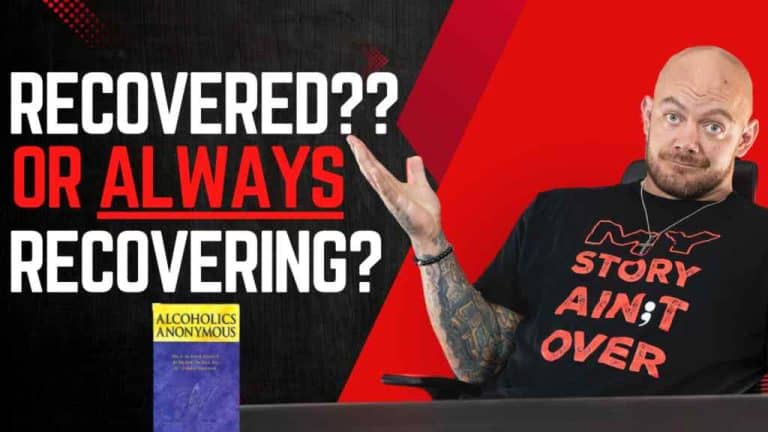
If you recently heard someone call themselves a “recovered alcoholic” or “recovered addict” for the first time, it might have stirred up some feelings. Maybe confusion, judgment, or even resentment.
Or maybe, if you’re like me and you’ve suffered through years of alcoholism and drug addiction while people told you things like “you’ll always be a recovering alcoholic,” you felt something else. Curiosity, inspiration, or even hope.
In this blog, we’re going to unpack what the word recovered really means, what the Big Book of Alcoholics Anonymous actually says about it, and why I believe this message matters so deeply for those still suffering from addiction.

What The Big Book of Alcoholics Anonymous Really Says
The book Alcoholics Anonymous doesn’t leave much room for interpretation if you’re actually reading what it says. In fact, the word “recovered” appears dozens of times in the text, including on the very first page of the Foreword: “To show other alcoholics precisely how we have recovered is the main purpose of this book.” That isn’t just a suggestion. That is the mission.
It doesn’t say “how we are recovering.” It says how we have recovered.
Most people don’t know this because they haven’t studied the text. They’ve heard one person say “recovering alcoholic” at a meeting, and the phrase stuck. But when you actually read the book, it becomes clear that being a fully recovered alcoholic is not only possible, it is the entire point of working the 12 Steps.
The Big Book describes the problem as a mental obsession that blocks us from making the right decision around that first one drink. Once we pick up, the physical craving kicks in and we are no longer like the normal person who can just stop drinking. But the Steps are designed to give us a spiritual experience that removes the obsession so we never have to pick up again.
There is only one Step that mentions alcohol at all: Step One. The rest of the program has nothing to do with getting off drugs and alcohol. It is about how to live in freedom and service to others. That is what separates a fully recovered alcoholic from someone who is just abstaining and white-knuckling it.
We are not talking about cured. We are talking about recovered. Free from the mental obsession, connected to God, and living with purpose without considering drinking or drugging as a solution to hardships.
This is the message the founders of 12 step programs wanted to spread. And it is the message we still carry today. Because the truth is, if we couldn’t recover from this, what hope would we be offering the person still suffering?
A Seemingly Hopeless State of Mind and Body
The Big Book describes alcoholism as being in a seemingly hopeless state of mind and body. That was me with drugs and alcohol. I couldn’t stay stopped, and every time I would start drinking or using, I lost control. This wasn’t just a willpower problem. It was a broken spiritual condition. The solution in Alcoholics Anonymous offers real recovery from alcoholism and addiction. It removes the obsession and gives us a new way to live.
“Recovered Alcoholic” vs “Recovering Alcoholic”

The difference between calling yourself a fully recovered alcoholic or still recovering is more than semantics. It is a declaration about identity, freedom, and purpose. A recovering alcoholic lives as if relapse is always looming and their mental health is on the brink or already off the rails. Someone who has recovered knows the obsession has been removed and lives in spiritual freedom.
This message has been distorted. In the 1960s, the treatment industry started using “recovering” to keep people dependent on their programs. It created a cycle where people would relapse, return, and keep paying instead of truly healing.
I’ve been sober for years. I don’t live in fear of drinking. The physical allergy is only triggered if I pick up, and I don’t want to. My sobriety is not a fragile state—it is rooted in purpose. I help others, I’ve rebuilt my life, and I’ve restored my family. The idea that we stay sick forever is a lie. We do recover. And when we do, it is our job to carry that truth to others.
Sharing My Experience as a Fully Recovered Alcoholic
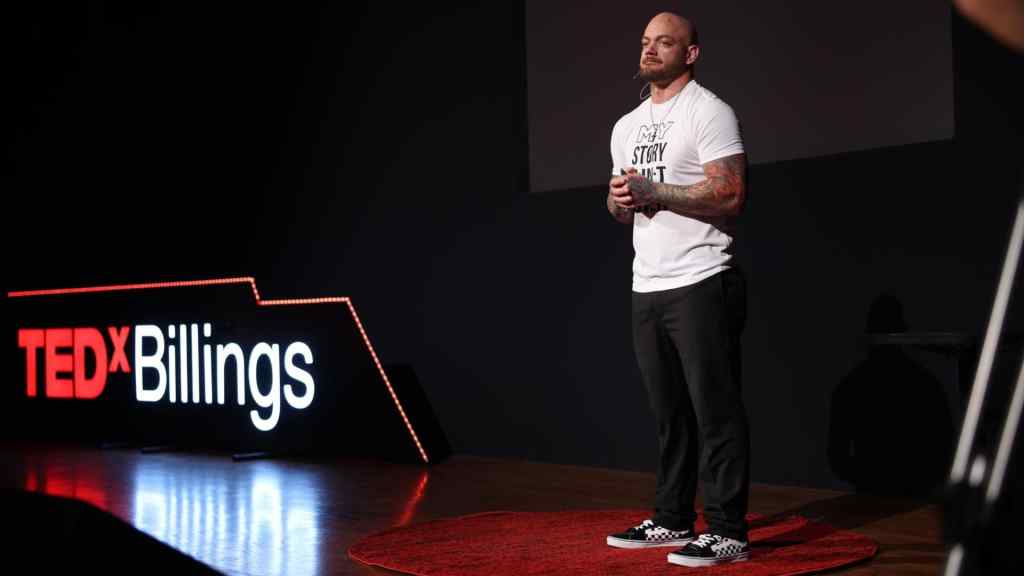
I’ve been in places most “recovering alcoholics” would say to avoid. When I spoke at a mastermind event in Medellín, Colombia, the afterparty was filled with drinking, drugs, and chaos. I wasn’t afraid or triggered. Two men from that event approached me. One couldn’t eat breakfast without a fifth of Jack, and the other was stuck in addiction and didn’t know where to turn.
This is why I share openly that I’m a fully recovered alcoholic. I no longer fear the first drink because the obsession has been removed. My spiritual condition has been restored. I don’t want to start drinking, and the physical allergy never gets activated because I simply don’t pick up.
The Big Book states we recoil from alcohol like a hot flame. That has been my experience. I don’t avoid these situations to protect myself. I enter them prepared to help the one who still suffers. That is the purpose of real recovery.
Permanent Recovery: A Message for the Newcomer
If you’re just starting out, hear me on this. The way you feel right now can be the last time you ever feel it. You can fully recover. Not manage, not fight forever, but actually be free.
It takes a real decision. It takes real work. This isn’t for the faint of heart. You have to treat it like your life depends on it. Because it does.
I was once hopeless, broken, and out of chances. But I did the work, and I found freedom. You can too. Focus. Commit. Finish. Then help the next person do the same.
What Recovered On Purpose Really Means

I love the Big Book of Alcoholics Anonymous, but I do not claim membership in any fellowship. I don’t do this only for traditions but because what has really helped me stay sober is getting knuckleheads in who are where I was and sitting down to read the book and do what it says. Not rely on a group of people to meet with every day I have nothing in common with except my past.
This is about using your recovery to help others find recovery however it works for you and for them. This is about sharing our personal experiences without the confines of the ideas of one group, one fellowship, or another.
Whether is was a treatment center, a church, the title page of a book, or a fellowship you are a member of that gives you the sense of purpose and belonging that helps you help others, this is about living to bring others to that.
You cannot give away what you don’t have. If you spend too much time hating on others’ paths you will suffer longer than you need while not helping as many as you can.
I love you and wish you the absolute best in everything you do and with every path you choose as you continue living Recovered On Purpose.

Adam Vibe Gunton is an American author, speaker and thought leader in addiction treatment and recovery. After overcoming homelessness and drug addiction, Adam found his life’s purpose in helping addicts find the same freedom he found. As Founder and Executive Director of the 501(c)3 nonprofit, Recovered On Purpose, and Managing Partner of Behavioral Health Partners, Adam has helped thousands find freedom from addiction all over the world.