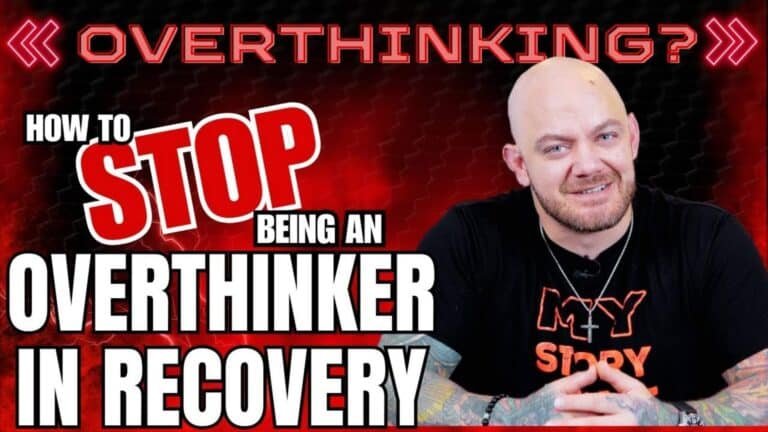
Are you wondering how to stop overthinking in recovery? If you’re the kind of person who can turn a simple thought into a full-blown mental tornado, you are not alone. For many of us going through a recovery journey, we were world-class members of the Olympic overthinking team. This pattern of obsessive thinking isn’t a sign that you are broken; it’s a sign that you are stuck in your head. These repetitive thoughts drain your mental energy and can make you feel overwhelmed, leading to real negative consequences for your emotional health.
But there is a way out. Learning how to stop overthinking isn’t about trying harder. It’s about returning to the foundational principles that got you sober in the first place.
This video provides simple, practical tools to help you break the cycle of overthinking. By putting these practices into your daily life, you can get out of your head and step into the life of peace and purpose that you are meant to live. It’s time to quiet the noise and start living in the freedom you’ve worked so hard to achieve.
The Spiritual Roots of Overthinking and Negative Thoughts

Overthinking often shows up in a few key ways:
- You replay past experiences until you feel sick,
- You worry about the future and how problems arise
- You get stuck in a loop of anxiety.
At its core, overthinking means one thing: you have slipped back into relying on yourself. When you try to control your life and all the things in it with your own thoughts, your mind gets flooded with information overload. Your emotions get tangled.
This isn’t just a bad mental habit; it’s a spiritual drift. Fear, anxiety, and guilt become an emotional spiral fueled by intrusive thoughts and distorted thinking. Events that trigger overthinking can be small, but the internal reaction is huge. This is dangerous in recovery because it keeps you out of the present moment, and the present moment is where God, peace, and well being reside. You cannot stay sober while living in imaginary scenarios. If left unchecked, this pattern can lead to mental health issues like anxiety disorders or even relapse.
You Are Not Broken: Overcoming the Overthinker Identity
Many people believe they are uniquely broken because of their persistent overthinking. This is not true. You are not a different category of damaged. Researchers call this unconstructive repetitive thought, and it has been proven to lead to consequences like depression, anxiety, and even difficulties in maintaining physical health.
Every person in recovery must learn how to deal with this in the same way. The first step is self-awareness; you must realize what is happening. Overthinking is simply a sign that you need to return to surrender. When you made the decision to turn your will and life over to a higher power, that included your thoughts. When you start taking back control, your thinking becomes chaotic again.
The truth is simple: you are not meant to think your way into recovery. You are meant to live your way into it. You must actively working to understand that a new way of thinking is a gift you receive as you take action. When your thoughts start spiraling, it is time to pause, reconnect, and hand the wheel back. With practice and self compassion, you can overcome this.
| Overthinking Pattern | Principle-Based Solution | Outcome |
|---|---|---|
| Replaying the past | Practice forgiveness and letting go | Freedom from shame and guilt |
| Worrying about the future | Trust in a higher power’s plan | Peace and acceptance |
| Analyzing what others think | Focus on your own actions and integrity | Confidence and authenticity |
| Imagining worst-case scenarios | Stay grounded in the present moment | Reduced anxiety and fear |
Practical Tools to Stop Overthinking

Learning how to stop overthinking requires a practical coping mechanism and daily action. The point is to reduce overthinking by giving your mind different things to focus on. Here are three strategies:
- Morning Prayer and Meditation: Before the noise of the world comes at you, spend time connecting with your higher power. Ask for selfishness and fear to be removed.
- The Great Distractor Secretary: This is an effective treatment for information overload. Keep a journal next to you. For example, while actively working on important issues, you might have other thoughts pop up. Write them down quickly without engaging. Once on paper, they lose their power.
- Service Work: You cannot overthink when you are fully present with another person. Service forces your attention outward and reminds you why you got sober in the first place.
Living Beyond Worry
You were created for more than worry; you were created for purpose. The goal is not to never think, but to stop trying to run your life with fear. When you surrender, act, and serve, overthinking naturally loses its power.
True peace comes not from having all the answers, but from trusting that you don’t need them all at once. Every step taken in faith, however small, builds a confidence that no amount of mental rehearsal ever could. You were designed to live forward, not to endlessly analyze backward, and the life waiting for you exists only on the other side of action.

Adam Vibe Gunton is an American author, speaker and thought leader in addiction treatment and recovery. After overcoming homelessness and drug addiction, Adam found his life’s purpose in helping addicts find the same freedom he found. As Founder and Executive Director of the 501(c)3 nonprofit, Recovered On Purpose, and Managing Partner of Behavioral Health Partners, Adam has helped thousands find freedom from addiction all over the world.